
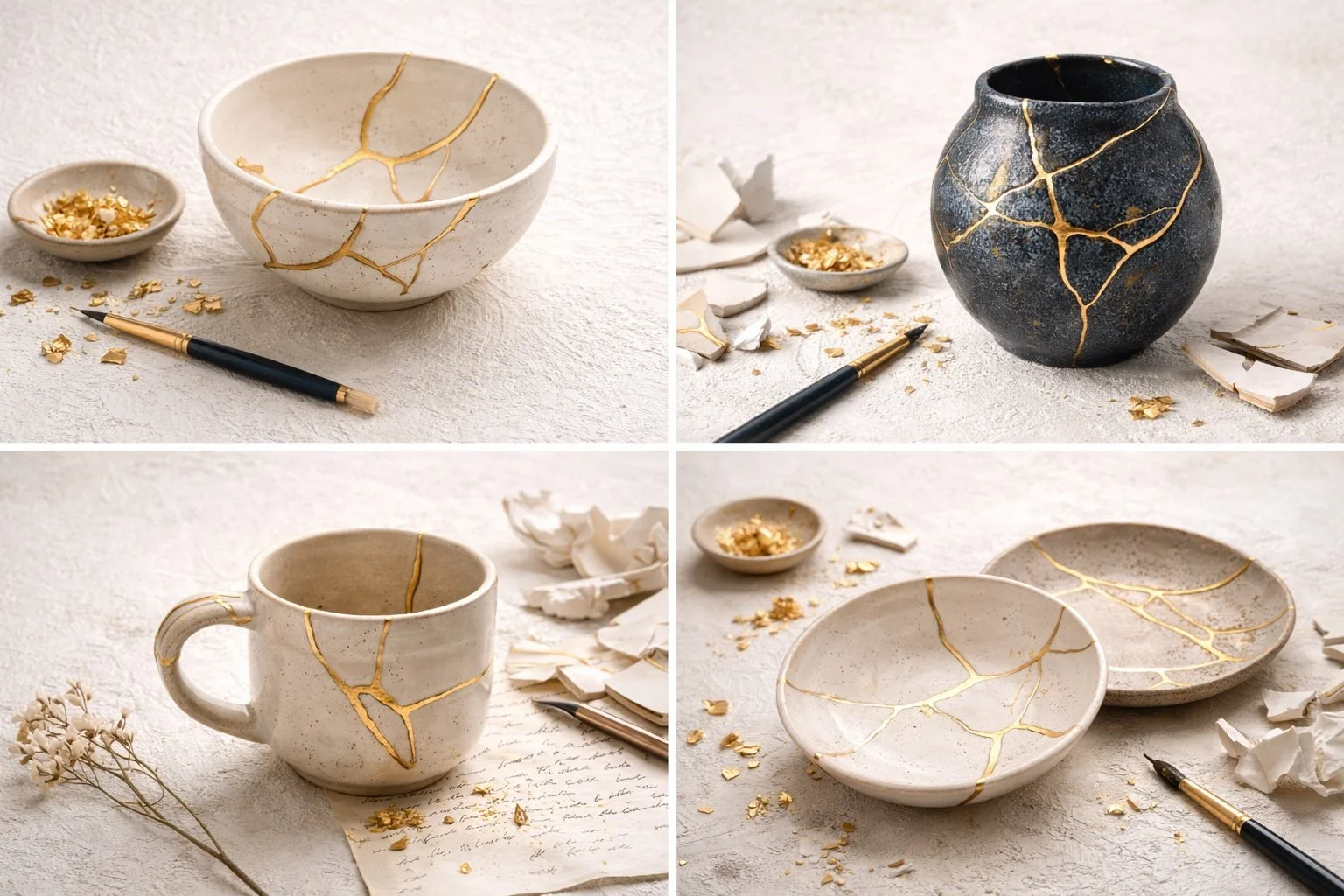
Welcome To
Certified Kintsugi Teacher Training
Where Creativity & Therapeutic Discovery Intersect
Teach the art. Hold the room. Become someone people trust with what’s tender.
This is a training for facilitators, clinicians, educators, and creatives who want to lead Kintsugi with skill, ethics, and depth.
Created and led by Jennifer Finch, LPC, NCC, SEP — somatic psychotherapist, meditation teacher, and long-time facilitator of embodiment-based learning.
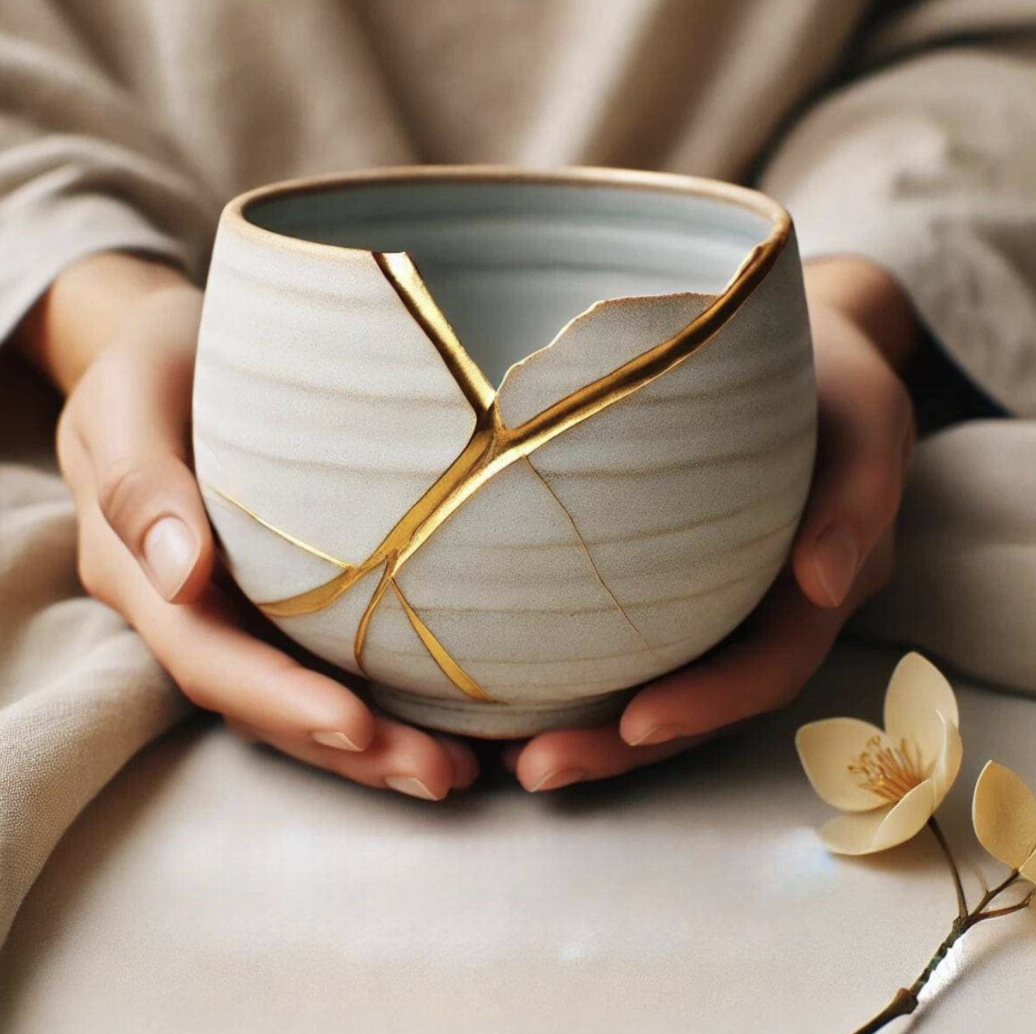
What is Kintsugi?
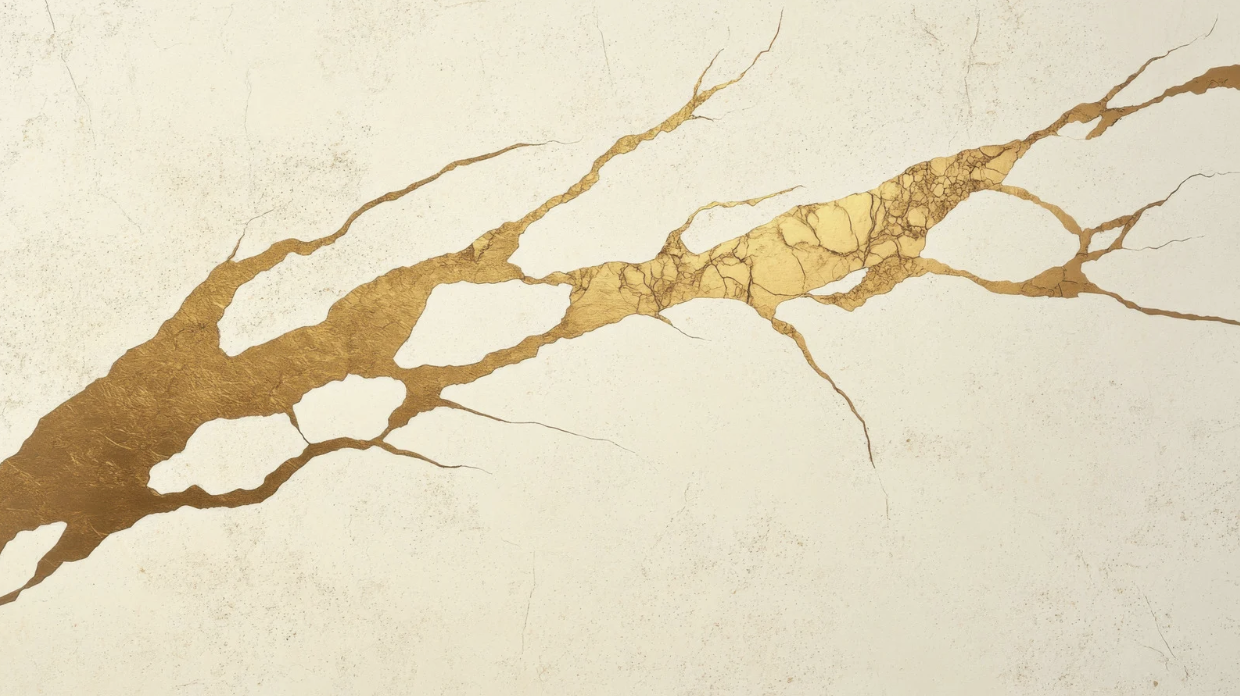
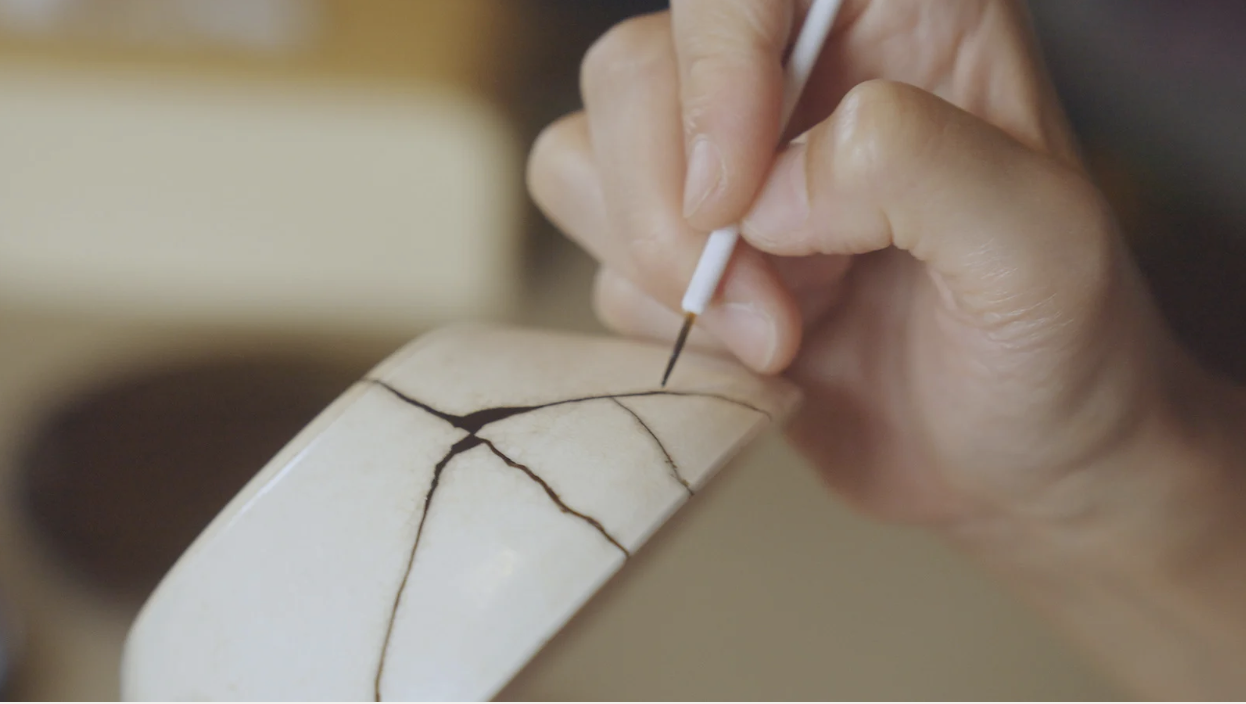
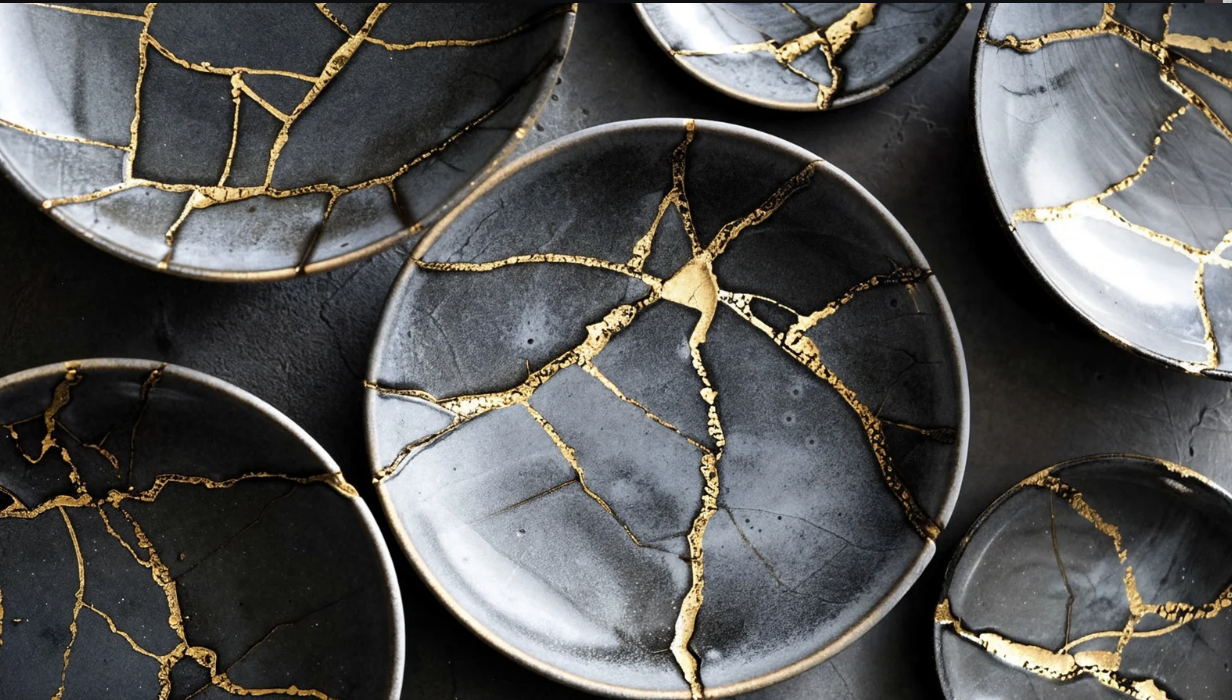
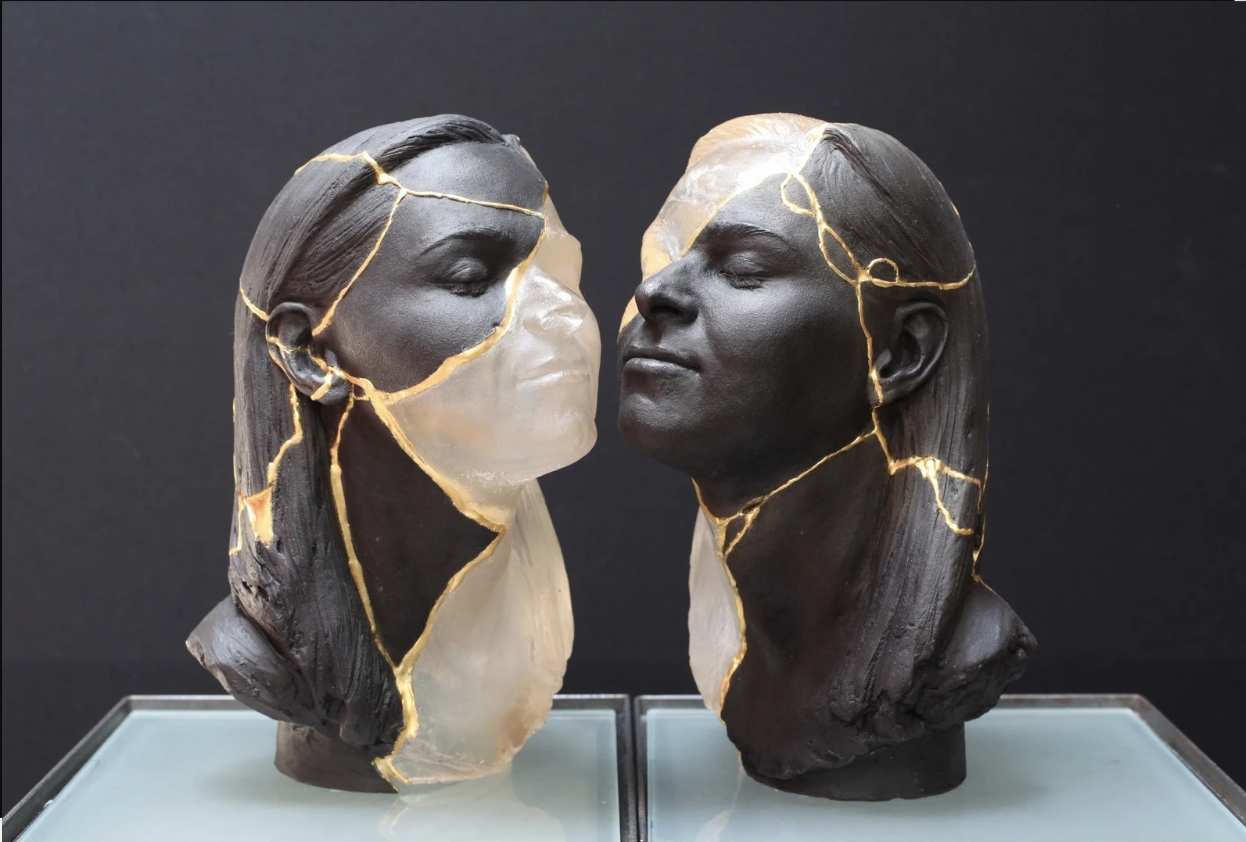
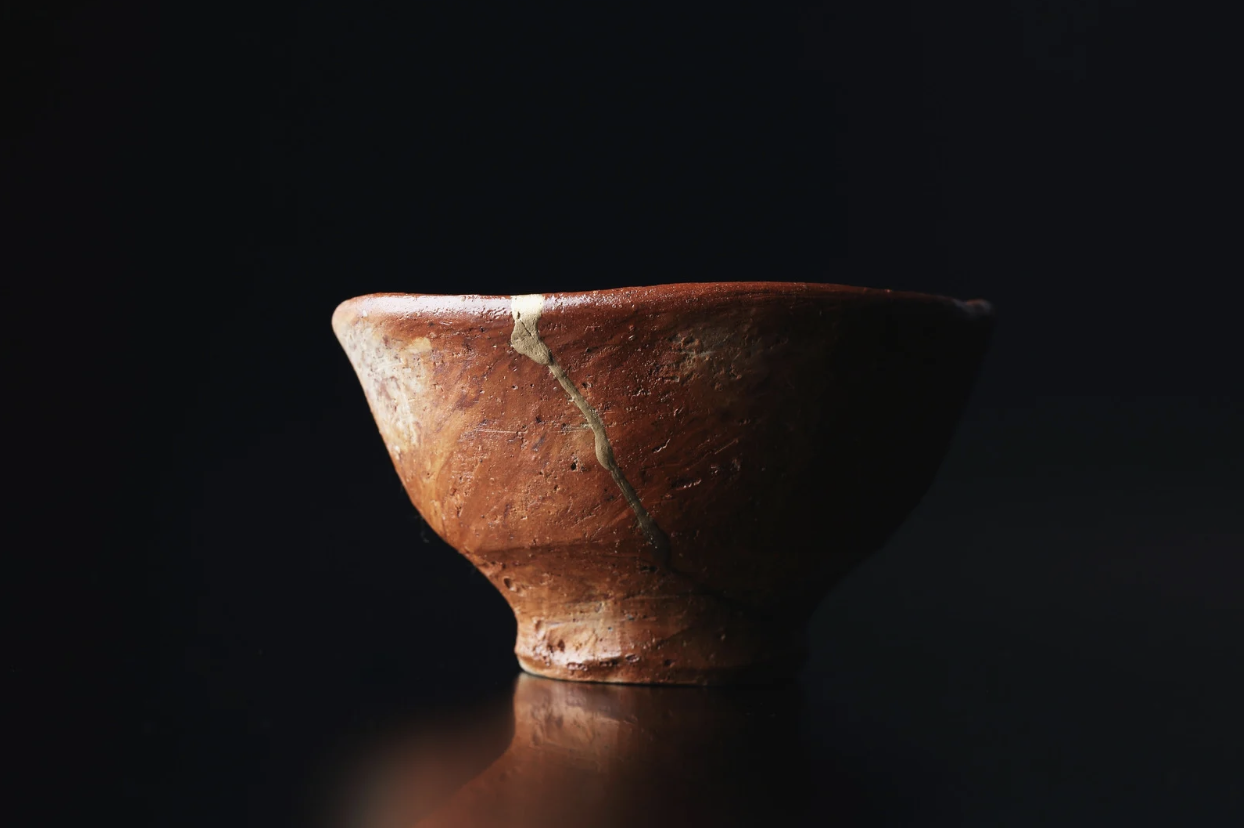
Kintsugi is an ancient Japanese art of repairing something broken with gold. It thus makes the object stronger and more beautiful than before, accentuating its flaws.
In this experiential teacher training workshop, Jennifer shares what she has learned and guides us through her favorite Japanese art of Kintsugi for cultivating inner strength and living a gracious life. It is a hands-on workshop where each participant will experience the introspective power of Kintsugi.
The world breaks everyone, and afterward many are strong at the broken places."
Ernest Hemingway's 1929 novel, A Farewell to Arms
What this training is
This is not a craft workshop.
Kintsugi is beautiful—but teaching it well requires more than technique. It requires presence, pacing, and the ability to guide people through frustration, perfectionism, tenderness, and pride without turning the room into group therapy or a performance of “healing.”
This training is for those who want to teach Kintsugi in a grounded, skillful, trauma-aware way—whether you’re bringing it into retreats, clinical communities, leadership spaces, book clubs, recovery circles, or creative workshops.
You’ll leave with a teachable framework, clear facilitation language, a repeatable class structure, and the confidence to lead groups with confidence and artistry.
You’ll be certified to teach:
Intro Kintsugi Workshop (not a teach-the-trainer workshop)
A repeatable demo-to-creation class arc
A container that’s creative and professionally held
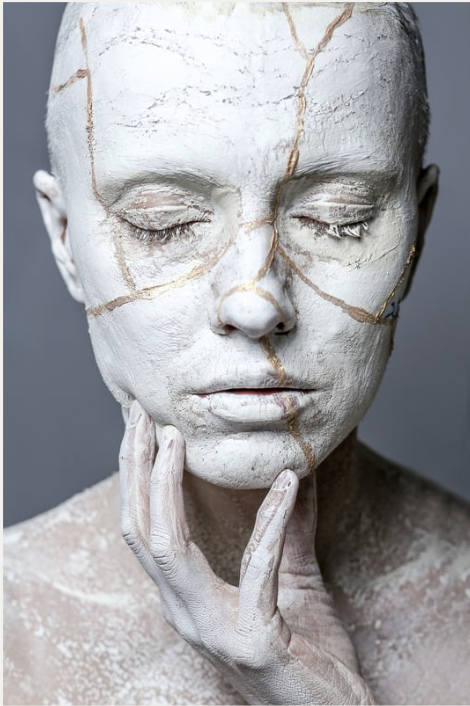
Who this is for
This is for you if…
You facilitate groups and want a reliable structure that actually works
You’re a therapist/coach/educator and want an ethical, bounded way to bring Kintsugi into your work
You want to teach creativity and depth without it becoming trauma-heavy, overly personal, or vaguely “inspirational”
You care about the beautiful metaphor and craft of Kintsugi and believe it can be used to help heal others
You’re ready to lead, create a niche, and have other revenue streams
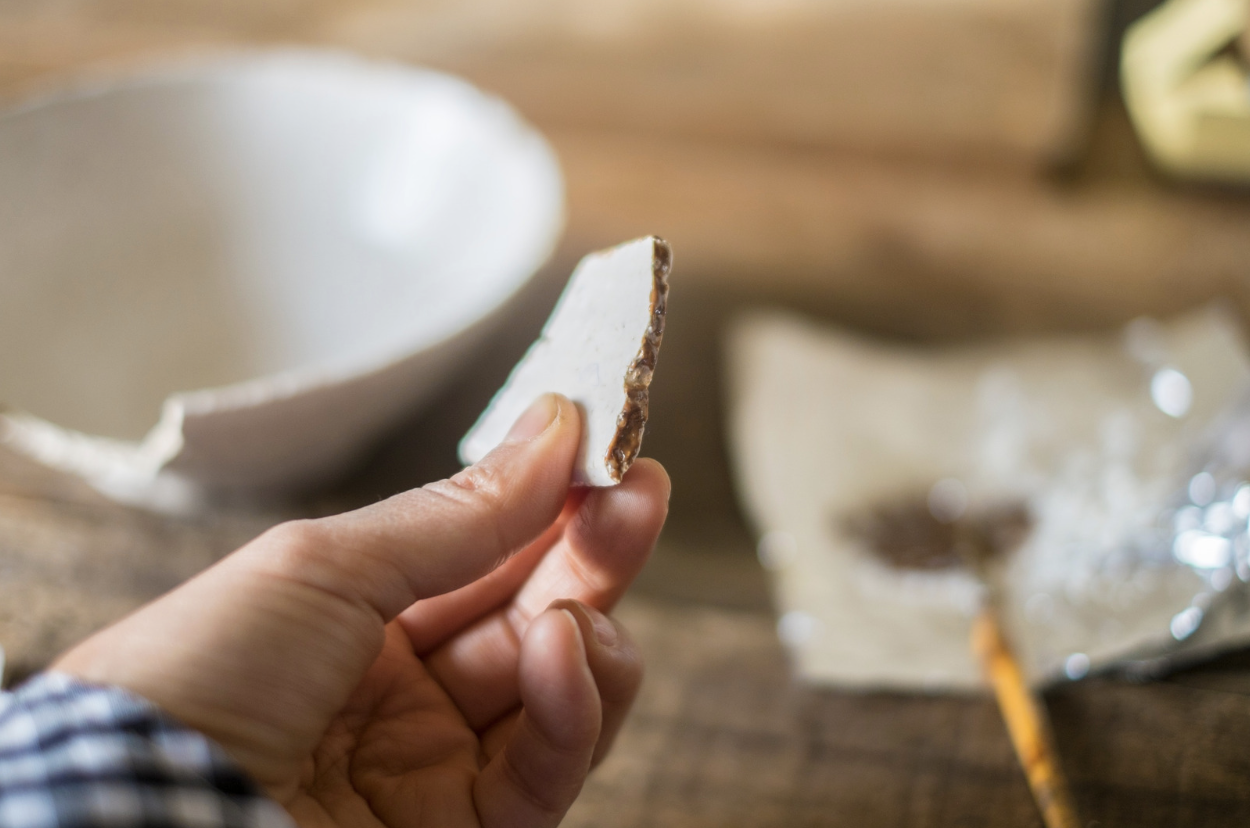
Kintsugi is Harder Than It Looks
It takes longer than you think.
It asks more of you than you expect.
And it has very little interest in rushing to meet your timeline.
This training isn’t built around quick wins or feel-good crafting. It’s built around learning an art form that requires steadiness, patience, and the willingness to work through moments of frustration, uncertainty, and imperfection—both in the material and in yourself.
Kintsugi asks for attention, care, and the ability to stay present with something that does not resolve quickly. Teaching it well requires even more: the capacity to guide others through their own edges without rushing them, rescuing them, or turning the experience into something it isn’t.
If you’re someone who values depth, patience, and learning to lead a room with resilience—even when things aren’t going smoothly—you’ll likely feel at home here.
If not, there are many beautiful ways to enjoy Kintsugi as a personal art practice without stepping into the role of teacher.
This training may not be for you if:
You want a fast, casual, one-and-done craft experience (totally fine—just not this)
You have little tolerance for slow processes or repetition
You prefer constant stimulation over sitting, observing, and waiting
You dislike being gently challenged in how you approach mistakes
You want something purely inspirational without skill-building
You’re not interested in working through your own impatience or perfectionism
You’re hoping to teach this after only a casual introduction
You resist structure, feedback, or refining your technique
You want immediate mastery rather than a process that unfolds over time
You’re looking for a quick certificate without practice or feedback
You want the focus to be emotional processing rather than learning to teach an art form well
You dislike structure, timing, and skill-building (we’ll do all three)
What you’ll learn
What you’ll be able to do after this training
Teach the method: materials, break/repair process, gold lines, finishing
Run a room: timing, pacing, setup, and troubleshooting without fluster
Hold clean boundaries: creative depth without turning it into therapy
Facilitate safely: manage frustration, shame spirals, perfectionism, shutdown
Use language that works: prompts, cues, transitions, closing circles
Create repeatable outcomes: a workshop people rave about and recommend
Design your offering: pricing, structure, audience fit, and marketing basics
Teach from your own style: not scripted—supported
If you’re bringing Kintsugi into clinical or high-responsibility spaces, we’ll cover scope, consent language, and how to keep your role clean.
Certification requirements
Attend the full training (in-person)
Complete one Kintsugi repair independently
Submit proof of completed piece + short reflection on your process
Demonstrate ability to teach the steps clearly
You receive:
A complete materials kit to support confident teaching
A comprehensive 50-page instruction manual
Certificate of completion
Teacher permission to offer this certified workshop format
Listing on the Be Here Now Kintsugi social page
Membership and access to a professional community that supports the development and visibility of your offerings
Help with marketing and advertising your offerings
This training moves through the full arc of learning the art, understanding the process, and becoming capable of teaching it with clarity and steadiness.
We begin with the foundations of Kintsugi—its philosophy, history, and aesthetic sensibility—so that the work is understood as more than a metaphor or a decorative repair. From there, you’ll learn the materials and methods in a hands-on, practical way: how to break and repair pieces, work with adhesives and powders, troubleshoot common problems, and finish work so that it holds both structurally and visually.
As the training unfolds, the focus expands beyond making to teaching. You’ll learn how to demonstrate the process clearly, pace a class so participants can succeed, and structure a workshop that doesn’t feel chaotic or rushed. We’ll explore how to guide a room through the moments that inevitably arise—frustration, perfectionism, comparison, shutdown—without turning the experience into therapy or leaving people unsupported.
Because many participants bring this work into professional settings, we’ll also address scope and ethics: how to offer Kintsugi in a way that is psychologically aware without overstepping, how to set expectations, and how to hold a creative container that remains both warm and well-boundaried.
You’ll leave with a clear, teachable workshop structure you can adapt to your own audience and environment. We’ll cover practical considerations like timing, pricing, and what to include (and what to leave out), so your offering feels cohesive rather than improvised. Throughout the training, you’ll have opportunities for practice, feedback, and refinement so that by the end you’re not just familiar with the process—you’re prepared to lead others through it with confidence and care.
The goal is simple: to help you learn the craft well enough to teach it, and to develop the presence required to hold a room while people engage with something that is slower, more exacting, and more revealing than most expect.
Certification Requirements:
Certified Kintsugi Teacher Training
A proprietary facilitator certification for therapists, educators, coaches, and group leaders who want to bring the symbolic practice of Kintsugi into workshops, groups, retreats, and educational settings.
Certification awarded by Be Here Now Mindfulness, LLC upon successful completion of training requirements.
Participants must complete the full training, participate in the experiential process, demonstrate the ability to safely facilitate the Kintsugi exercise, understand contraindications and scope of practice, agree not to present the work as therapy unless independently licensed, and use approved language/materials.
Disclaimer:
This certification does not constitute a mental health license, art therapy credential, or state/national accreditation. It certifies completion of this proprietary training model and readiness to facilitate Kintsugi-based workshops within the participant’s existing scope of practice.
Because wellness claims can get messy, this certification does NOT promise healing outcomes unless you can substantiate them. The FTC expects health-related claims to be truthful, not misleading, and supported by reliable evidence. You can read more about the FTC guidelines here.
Testimonials:
“This workshop got to the heart of trauma work. It’s about taking your (perceived) brokenness and putting it all back together in a different, beautiful way. What happens to us in our lives changes us, and it contributes to our beauty. Kintsugi is definitely a “beauty to ashes” exercise that instills hope, tenacity, and perseverance when you’re on a personal journey of growth and/or recovery. Jennifer is an excellent instructor and her passion for bringing people into a healthy place with their traumas shows in a powerful way.”
“I took a Kintsugi class with Jen and had an unbelievable experience. I then invited her to my studio to offer the class to others. We need to pass these skills and ways of living onto the next generation. Thank you Jen!”
”Jennifer’s Kintsugi seminar was a day-long event that led us down the path of self-exploration, helping us recognize our “brokenness” and learning to embrace the concept of healing and strength from those places within ourselves. By literally breaking an object and putting it back together with gold, we learn that those places are the strongest on the object, and represent our own unbreakable strength in the aftermath of trauma. It was a valuable and healing experience.”
”I attended an all-day mindfulness and Kintsugi retreat run by Jennifer Finch this past January. It has changed the way I deal with daily stress and lifelong traumas. I cherish the piece that I made in the class and I keep it as a reminder that we can change our narrative and the (often negative) soundtrack that plays in our heads to something more positive and be present in a place of peace.”
”I wasn’t sure what to expect but WOW! Jen made everyone feel welcome and for once I got out of a class feeling like ‘I can do this’ and be a better parent and a more present parent.”
”Jen Finch is a friend and mentor, and I gain so much from her knowledge, experience and compassion - in and outside of her class. Jen's curriculum stems from a relatable and wholly applicable philosophy that is completely secular. Every frontline worker should give herself this gift!”
“ Healing, settling, affirming. Exactly the kind of experience our world needs now!”
“I enjoyed the workshop and my mindful experience. The atmosphere was very conducive to what was being taught and shared. I felt safe and comfortable. Jennifer is a wonderful instructor who compassionately led the group through some tough moments/emotions.”
“Jennifer is the perfect combination of Knowledge and Somatic Experience—heart & mind complemented.”
“I love that it’s a space to feel emotions/hurts that come up and also to learn from others’ past hurts that help you see things in a new way/light. It’s ironically a safe space with strangers. I also loved the process of Kintsugi….very therapeutic and symbolic.”
“I loved the workshop! It was moving and educational. I am trying to practice mindfulness in my daily life. It brought out emotions I did not realize I was harboring. It was a unique and life changing experience. Thank you!”
“I really enjoyed the workshop, it was a wonderful experience and the symbolism behind the activity is profound and worth the time and money.”
“I loved this workshop. Jen was very thorough in explaining the history and method of Kintsugi. The experiential exercises added to the intimacy of the workshop. Well done!”
“Great Course! Very applicable to my areas of my own life. Highly Recommended! Thank You!'“
“My experience was wonderful. I felt as if it was realistic and comforting for everyone to be themselves and help each other through life.”
“This workshop got to the heart of trauma work. It’s about taking your (perceived) brokenness and putting it all back together in a different, beautiful way. Definitely an ‘ashes to beauty’ exercise that can instill hope, tenacity, and persevere as someone who continues on a personal growth/recovery journey.”
“This workshop is filled with wisdom, stemming from a tradition that goes back hundreds of years. It’s also fun and very insightful. I highly recommend it!”
“Excellent workshop! Much more than I had expected! Phenomenal!”
“Very experiential and insightful/reflective workshop. Very well done and informative. Lessons that I’ll take with me throughout life.”
“I loved every aspect of this workshop and the research material you shared with us. Hearing your voice under meditation is very nice and easily lets me focus. You are a gem.”
“It was much more reflective and healing than I anticipated. I am grateful for my new perspective: my scars make me more unique and beautiful.”
“A day with Jennifer is always a day well spent. The material is profound and yet Jennifer doesn’t make it intimidating. It is accessible, useful and applicable for everyday life. I could have spent more time but feel I got so much out of it. Thank you, Jen!”
Meet the Instructor

I’m Jennifer Finch—somatic psychotherapist (LPC, NCC, SEP), teacher, and facilitator. My path into Kintsugi didn’t begin as a hobby or aesthetic interest. It began in grief.
In 2013, shortly after my mother died of ovarian cancer, I found myself in the disorienting aftermath of having been her primary caretaker for three years. One afternoon, standing in my garage with more feeling than language, I took a coffee mug and smashed it on the floor. It shattered completely. I remember standing there looking at the pieces, not trying to fix anything, just noticing what had broken.
Around that time, I had recently been introduced to Kintsugi through the series The Man in the High Castle. There’s a quiet scene in which the Trade Minister, Nobusuke Tagomi, carefully repairs a broken object using gold. The pacing of the moment stayed with me—the attention, the restraint, the care required to mend rather than discard. I began studying the practice more closely and was struck by the simple yet profound shift it offered. When something breaks, the task isn’t to return it to how it was. The task is to work with what is now here. We get to choose whether to expand into a new form.
That idea landed deeply. In a period when nothing in my life felt intact, the possibility that something fractured could be tended to—patiently, deliberately, without pretending it hadn’t changed—made a lasting impression. It suggested that repair is not a reversal but an expansion. We don’t go back. We learn how to move forward with what has been altered.
I began experimenting with Kintsugi and other wabi-sabi art forms as I sorted through my mother’s five-bedroom home after her death. Among the many objects she’d collected over a lifetime as an art historian and traveler were several Kintsugi pieces from her trips to Japan. I was dumbfounded! One, to my surprise, dated back generations to the Ming Dynasty. We had never spoken about them. Finding them in the midst of that process felt less like more than coincidence and more like a message directly from her. I paid attention to this.
My mother touched many lives and had a deep reverence for art, beauty, and history. Discovering those repaired pieces in her home, while learning to repair broken objects myself, felt like a continuation of something she had been passing along without either of us realizing it. Over time, what began as a personal practice became a teaching practice—one that allows people to encounter patience, effort, imperfection, and care in a tangible way.
This training grows out of that lineage: from her to me, and now, if it resonates, from me to you.
Let’s create something meaningful together.
Frequently Asked Questions
-
No. We will offer a number of creative solutions if you struggle with the medium. But anyone can do Kintsugi if you allow for play, imperfection and trust the process.
-
Absolutely. On many occasions, I have done Kintsugi with clients one-on-one in individual sessions. You can also offer to small, contained groups.
-
Unfortunately, this is a live, in-person only option. In order to obtain reliable results, this is a hands-on craft experience. The community building and connection are also what set us apart from online training formats.
-
You can reach me anytime via my contact page or email. I aim to respond quickly—usually within a few business days.
-
The training will provide all the materials you need to get started.
-
You can teach your own curated Kintsugi workshops and bring to any population or group you feel comfotable working with. It does not certify you to teach a teacher training.
-
At check out you will find options on how you can break up your payments into a plan of your choice. Unfortunatey, due to the costly nature of this teacher training scholarships are not offered at this time.
Ready to become the kind of teacher people remember?
If you feel a yes, apply now.
Let’s Work Together
If you're interested in working with me, complete the form with a few details about your project. We'll review your message and get back to you within 48 hours.